
by Jeanette Norden Ph.D., Professor of Vanderbilt University School of Medicine and am intrigued to see how our brain is central for our well being.
In this blog I will focus on learning and memory. For example what part of the brain is responsible for learning and memory and what can we do to improve these functions to achieve the quality of life we desire.
Learning and Memory is a part of limbic system function of our brain.
So what is Limbic System? A system of complexly inter connected nuclei and areas involved in learning, memory, emotion and executive function such as our ability to make a decision.
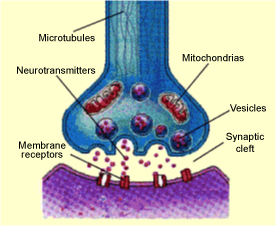
So what is Neurotransmitter? A chemical that transmits nerve impulses from one nerve cell to another or between a nerve cell and a muscle or organ. Some important neurotransmitters are serotonin, dopamine, norepinephrine, acetylcholine, and gamma-aminobutyric acid (GABA).
Brain areas implicated in memory:

There are three types of memory
Learning and Memory is a part of limbic system function of our brain.
So what is Limbic System? A system of complexly inter connected nuclei and areas involved in learning, memory, emotion and executive function such as our ability to make a decision.
So what is Neurotransmitter? A chemical that transmits nerve impulses from one nerve cell to another or between a nerve cell and a muscle or organ. Some important neurotransmitters are serotonin, dopamine, norepinephrine, acetylcholine, and gamma-aminobutyric acid (GABA).
Brain areas implicated in memory:
- Higher order areas of the prefrontal cortex-working memory.
- Hippocampus-short term learning and memory and some long term processes. Hippocampus can generate new neurons and known to show great adaptability-plasticity.
- Left Hippocampus-Language, episodic memory, autobiography.
- Right Hippocampus-Spatial Memory.
- Extrapyramidal motor system and cerebellum-involves in nondeclarative and motor memory.
- Amygdala-learned fear and emotional processing. Emotional learning and memory.
- Association area of the Neocortex-long term memory.
There are three types of memory
- Working or immediate memory resides in the frontal lobe (is usually less than 30 seconds). This form of memory is commonly referred to as one’s attention span. When you memorize and dial a new telephone number that someone just gave you that is an example of your working memory. Dopamine seems to be the most important neurotransmitter for neurons involved in working memory.
- Short term memory resides in your medial temporal lobe and lasts a few minutes to a few weeks necessary and is a first stage in learning. When you recall a conversation or a phone number learned a few minutes to a few weeks ago, your medial temporal lobe is activated.
- Long term memory may last long life time and yet be modified for example change with experience. The hippocampus and Association area of the Neocortex plays an important role in long term memory and other cognitive functions.
- Explicit (declarative) memory (Conscious): Includes semantic and episodic memory.
- Implicit (non declarative) memory (Unconscious): Primarily nonverbal and motor memory.
- Balanced Diet such as vegetables, fruits, fish oil, proteins, carbohydrates and plenty of water.
- Physical Exercise such as aerobics, brisk walking, swimming or cycling.
- Mental Exercise such as engage in challenging mental activities.
- Keeping stress in control such as taking a deep breath, walking in the nature, gardening, listening to your favorite music or simply spending time with your pets.
- What Works?
References
1.http://www.teach12.com/storex/professor.aspx?id=341
2. http://sharpbrains.files.wordpress.com/2006/09/limbic.gif
2. http://sharpbrains.files.wordpress.com/2006/09/limbic.gif
5. http://www.amenclinics.com/cybcyb/online-tests-calculators/memory-screen-test/types-of-memory/
6. http://www.mind.ilstu.edu/curriculum/neurons_intro/flash_chemical.php?modGUI=232&compGUI=1827&itemGUI=3159
7.http://www.ispub.com/journal/the_internet_journal_of_pharmacology/volume_7_number_1_27/article/pharmacology-of-learning-and-memory.html
8. http://thebrain.mcgill.ca/flash/i/i_01/i_01_m/i_01_m_ana/i_01_m_ana_1a.jpg
6. http://www.mind.ilstu.edu/curriculum/neurons_intro/flash_chemical.php?modGUI=232&compGUI=1827&itemGUI=3159
7.http://www.ispub.com/journal/the_internet_journal_of_pharmacology/volume_7_number_1_27/article/pharmacology-of-learning-and-memory.html
8. http://thebrain.mcgill.ca/flash/i/i_01/i_01_m/i_01_m_ana/i_01_m_ana_1a.jpg


No comments:
Post a Comment